Digital Twin Technology: How It Works and Why It Matters
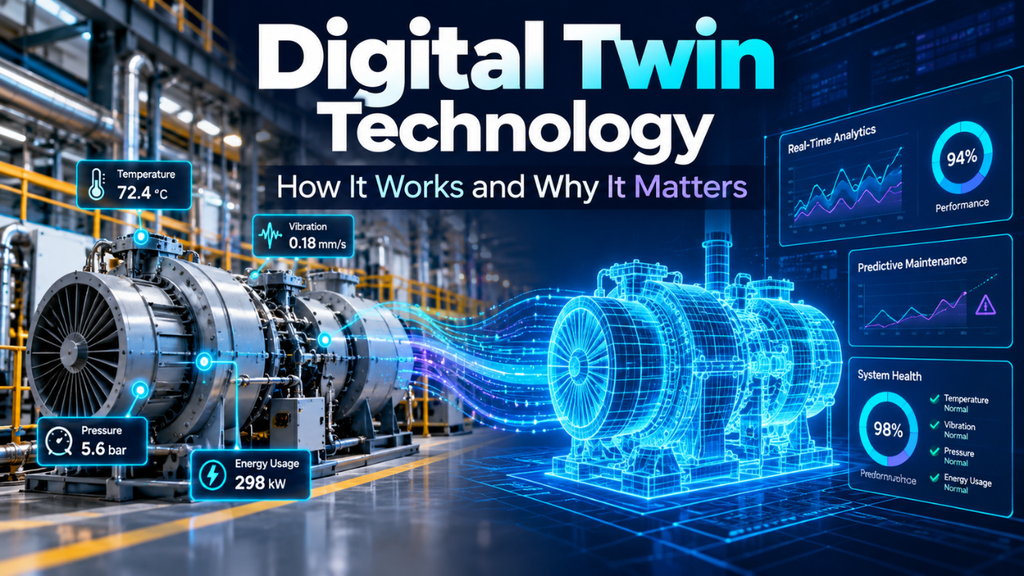
A cooling unit in a food warehouse starts using more electricity. The room still feels cold, deliveries keep moving, and nobody hears anything unusual. Yet something has changed.
Imagine checking a digital version of that system that combines its temperature readings, power use, and maintenance history. You could investigate the change while there’s still time to act.
That’s the practical appeal of digital twin technology. It gives people a way to understand physical things through a connected digital model. The interesting part is what that connection helps them notice, test, and improve.
Table of Contents
- What Is Digital Twin Technology?
- How the Physical and Digital Sides Stay Connected
- What Makes a Model a Twin?
- Where Digital Twins Make a Practical Difference
- Turning Information Into Better Decisions
- The Limits You Need to Understand
- Starting With One Useful Problem
- Where the Technology Goes From Here
What Is Digital Twin Technology?
Digital twin technology creates a software representation of a real object, system, or process and updates it using information from its physical counterpart. A twin can represent a pump, a production line, or an entire building.
Depending on its purpose, the model may combine measurements, engineering details, service records, and information about the surrounding environment. This helps people track current conditions and explore how the real system might behave under different circumstances.
The word “twin” can suggest a perfect copy. In practice, teams choose which details matter for a particular job. A model built to understand energy use may need very different information from one built to study mechanical wear.
Think of two identical delivery vans. One spends its days in heavy traffic; the other travels long motorway routes. Their designs match, but their operating histories differ. A useful twin can reflect those differences.
How the Physical and Digital Sides Stay Connected
The connection usually starts with measurements. Sensors might record pressure, vibration, temperature, speed, or electricity use. Existing control systems and maintenance databases can contribute information too.
Software gathers those inputs, checks them, and connects them to the correct equipment. That sounds straightforward until you discover that three departments use three different names for the same machine.
The model then uses relevant information to represent the system’s condition. Depending on the application, it may include physical equations, operating rules, or statistical relationships. Reliable connections and suitable models are central to keeping the digital representation aligned with reality.
Updates happen at a rate suited to the task. A fast-moving machine may need frequent measurements, while a slowly changing structure may need less frequent updates. “Real time” should mean timely enough for the decision being made.
Some systems also send instructions back to equipment. Others provide information for a person to review and act on. Automated control needs extra safety measures, and not every digital twin is designed to handle it.
What Makes a Model a Twin?
A 3D model can show where pipes run through a building. A simulation can help predict how a system will respond to changes in water pressure. A connected digital twin adds information about the particular building and its actual operating conditions.
These tools can work together. A twin may contain a 3D view and use simulations to explore possible outcomes. A standalone simulation can also be sophisticated and updated regularly; its scope depends on how it was built.
The terminology varies across industries, so it’s sensible to ask what a proposed system actually does. Which real asset does it represent? How does it receive updates? What decisions can it support?
Those answers reveal far more than an impressive animation.
Where Digital Twins Make a Practical Difference
Manufacturing offers a clear example. Picture a packaging line where boxes keep piling up before the sealing station. A connected model can help teams monitor machine speeds, identify delays and downtime, and test different ways to improve operations.
Speeding up one machine may simply move the queue elsewhere. Looking at the line as a system helps the team investigate those knock-on effects. Monitoring equipment health and evaluating production schedules are established digital twin applications.
Buildings present a different challenge. Heating, cooling, occupancy, and outdoor conditions all affect one another. A building twin can combine relevant information to help operators understand comfort problems and energy use.
Suppose a meeting room gets too warm every afternoon. The model could help explore whether sunlight, occupancy, airflow, or operating schedules explain the pattern.
Energy operators use twins to study equipment such as wind turbines and other generating assets. Measurements and operating history can support maintenance planning and performance analysis, particularly where equipment is difficult to reach.
Warehouse planning is another useful setting. Teams can model layouts and test how changes affect movement and capacity before committing to physical alterations. The level of connection to live operations varies between projects.
Turning Information Into Better Decisions
An alert tells you something deserves attention. Understanding what to do next takes context.
Consider a motor that’s running hotter than usual. Temperature alone leaves several possibilities open. The load might have increased, the room might be warmer, or a component might be wearing out. A suitable twin can help investigate these relationships by bringing relevant measurements and expected behaviour together.
It can also give teams a place to test ideas. What happens if production moves to a different shift? Would changing an operating setting reduce strain? How might a planned shutdown affect the rest of the process? Such analysis can support maintenance and operational planning.
Here’s the thing: the result still needs to reach someone who can use it. An engineer may need a detailed analysis. A shift supervisor may need a clear recommendation and enough evidence to judge it.
That handoff deserves as much attention as the model itself.
The Limits You Need to Understand
Let’s be honest: a digital twin can look convincing while giving poor advice.
A faulty sensor, an incorrect equipment record, or an outdated assumption can distort the result. Teams need to compare model outputs with actual behaviour and check whether the model remains reliable as conditions change. Validation is an ongoing responsibility.
Imagine replacing a pump with a different model while leaving its old specifications in the software. Fresh sensor readings keep arriving, yet the twin’s expectations may be wrong. Keeping the model current requires clear ownership.
Predictions also carry uncertainty. A model tested during normal operation may perform poorly during an unusual heatwave or an unfamiliar production pattern. Its users need to understand where its evidence is strong and where caution is needed.
Security deserves attention because twins can gather detailed operational information and sometimes connect to controls. Protecting access and the integrity of those connections matters.
Then there’s cost. Sensors, integration, specialist work, and ongoing upkeep all require resources. For a simple problem, a basic monitoring tool may already provide everything the team needs.
Starting With One Useful Problem
One sensible starting point is a recurring decision that people struggle to make with the information they have.
Perhaps a cooling system wastes energy, a machine stops unexpectedly, or a production schedule creates delays. Define the problem clearly enough that you can tell whether a model helps.
For example, “understand why this machine overheats during the afternoon shift” gives a project a useful focus. It helps determine which measurements to collect and which operating conditions to examine.
Bring the people who use and maintain the equipment into that discussion early. A technician may know that a valve sticks after cleaning. A model developer needs that detail, even if it never appeared in a maintenance log.
A practical pilot can then compare its findings with real observations over a defined period. Decide in advance what would count as progress: fewer unexpected stops, less wasted energy, or a faster diagnosis.
Expanding becomes easier to justify once the first model has earned people’s trust.
Where the Technology Goes From Here
Connecting twins across equipment and lifecycle stages could help teams understand how local changes affect a wider operation. Making that work depends on compatible data, reliable models, and clear ways to exchange information. These remain active areas of development.
Digital twin technology becomes useful when it helps someone handle a real situation with greater confidence. That might mean investigating a warm motor, adjusting a cooling schedule, or testing a factory change. Start with a question that matters, keep the model grounded in reality, and judge it by the decisions it helps people make.